
“It’s not my job.”
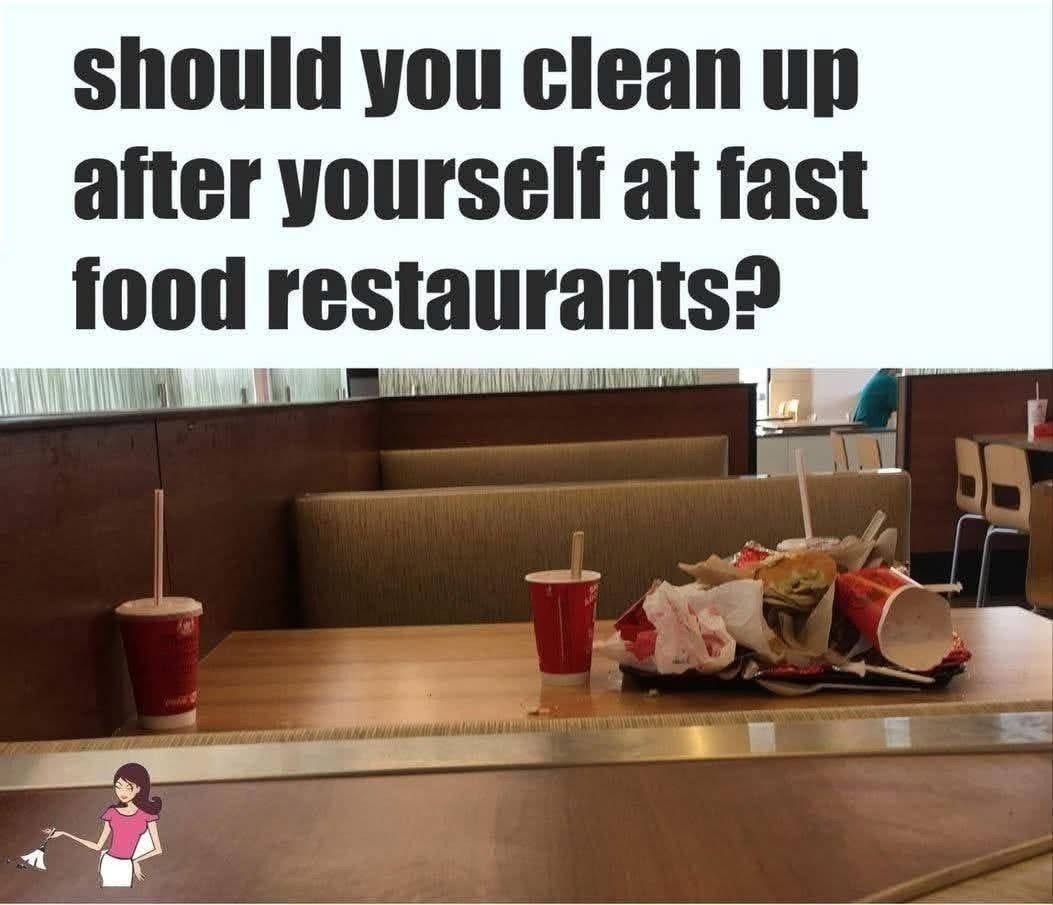
In fast-food environments, clearing your tray is part of the system. You’re not being asked to mop floors or sanitize tables—just to take responsibility for your own waste.
“No one told me to.”
Many places don’t need to say it explicitly because it’s a widely understood norm. Trash bins and tray stations are the instruction.
When It’s Reasonable Not to Clean Up
There are situations where it’s perfectly understandable not to fully clear your table:
Restaurants
You have a disability or mobility issue
You’re pregnant or carrying a small child
You feel unwell or injured
Staff specifically ask customers to leave trays
In these cases, even a small effort—like stacking trash neatly—can still make a difference.
What Cleaning Up Actually Means (and Doesn’t)
What you should do:
Home Furnishings
Throw away wrappers, cups, and leftover food
Return trays if there’s a designated area
Wipe obvious spills if napkins are available
What you’re NOT expected to do:
Scrub tables
Mop floors
Disinfect surfaces
Replace staff duties
Cleaning up after yourself is about responsibility, not labor.
A Cultural Perspective
In many countries, especially in parts of Asia and Northern Europe, cleaning up after yourself is non-negotiable. Leaving a mess is seen as disrespectful to both staff and other customers.
While norms vary by culture, global trends increasingly favor shared responsibility in public spaces—especially in self-service environments.
The Bigger Picture
Small actions reveal big attitudes. Clearing your table shows:
Awareness of others
Respect for workers
Consideration for shared spaces
It’s not about perfection—it’s about decency.
The Bottom Line
Yes, you should clean up after yourself at a fast-food restaurant when you’re able to. It’s polite, practical, and aligned with how these places are designed to operate. You don’t need to go above and beyond—just don’t leave a mess behind.
Restaurants
A few seconds of effort can make someone else’s day a little easier. And that’s always worth it.
ADVERTISEMENT

