
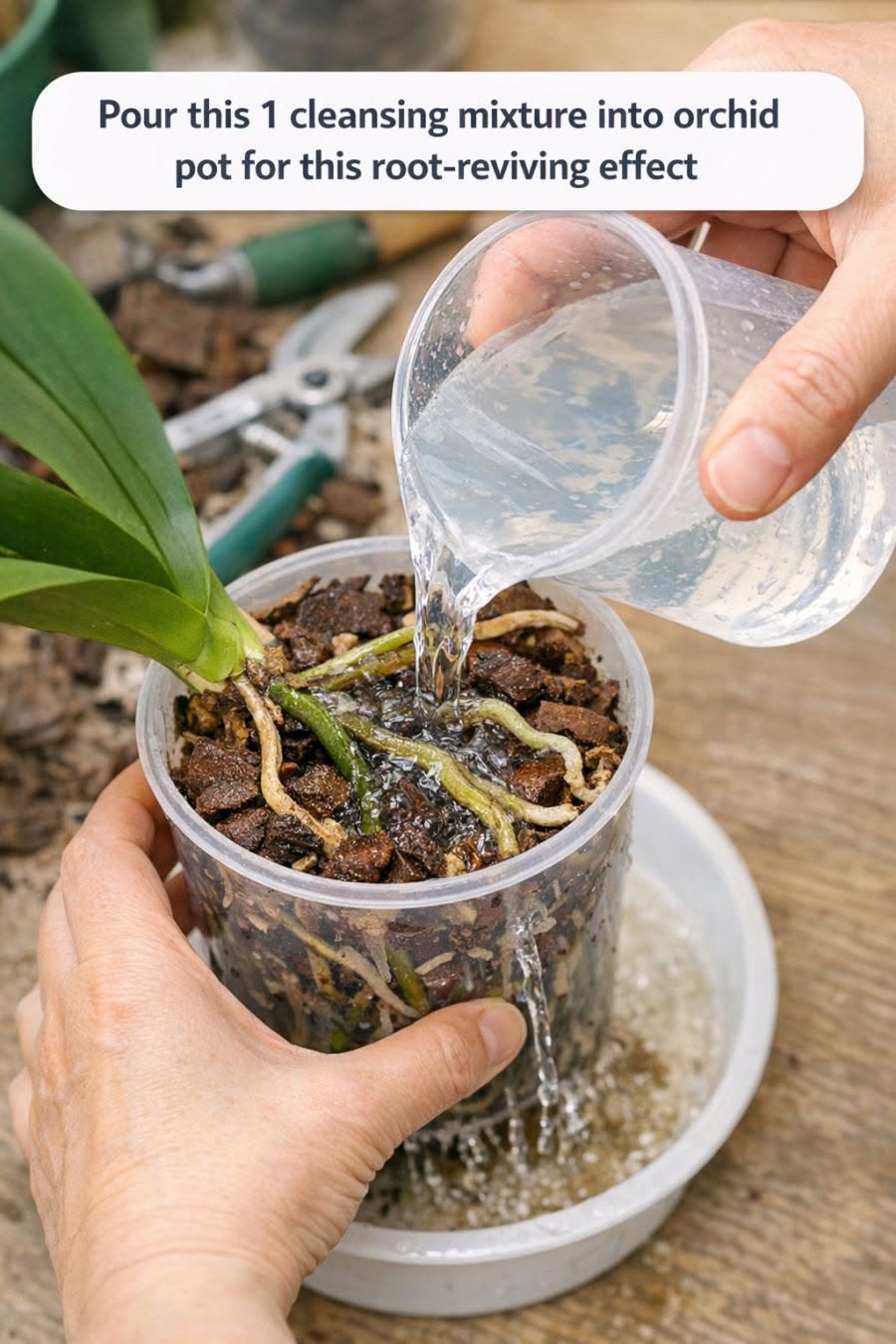
4. How To Mix the Root-Cleansing Solution Step by Step
To prepare the root-cleansing solution, you will need a bottle of 3% hydrogen peroxide, which is readily available at most pharmacies or grocery stores, and distilled or filtered water. Follow these steps:
1. Measure out 1 cup of 3% hydrogen peroxide.
2. Measure out 2 cups of distilled or filtered water.
3. Combine the hydrogen peroxide and water in a clean container and mix well.
4. Pour the mixture into a watering can or spray bottle for easy application.
5. The Right Way To Pour the Mixture Into the Orchid Pot
To apply the mixture, first ensure that your orchid’s potting medium is dry. This allows the solution to penetrate more effectively. Slowly pour the mixture over the potting medium, ensuring even coverage. Be careful to avoid pouring directly onto the leaves or flowers, as this can cause damage.
Allow the mixture to drain completely from the pot, ensuring that excess liquid does not pool at the bottom. If your orchid is potted in a container without drainage holes, consider repotting into one that allows for proper drainage to prevent waterlogging.
6. Signs the Cleansing Mixture Is Healing Your Orchid’s Roots
After applying the cleansing mixture, you may notice several positive changes in your orchid’s roots. Healthy roots will appear firm and white or green, while unhealthy roots will be mushy or brown. The mixture helps to remove dead tissue, allowing new root growth to emerge.
Within a few weeks, you should also see an improvement in the overall vigor of your orchid. Leaves may become more turgid, and the plant may begin to produce new growth or flower spikes if conditions are favorable.
7. Common Root Problems This Mixture Helps Fix
The hydrogen peroxide mixture is particularly effective against root rot, a condition caused by overwatering and poor air circulation around the roots. It helps to clear away dead tissue and kill bacteria and fungi that contribute to rot.
Additionally, the mixture can help alleviate issues related to mineral buildup, such as leaf tip burn or stunted growth. By flushing away excess salts and minerals, the roots can absorb nutrients more efficiently, supporting healthier growth.
8. Mistakes To Avoid When Using the Cleansing Mixture
While the cleansing mixture is beneficial, there are a few common mistakes to avoid. First, do not use a concentration higher than 3% hydrogen peroxide, as this can damage the roots. Also, avoid applying the mixture too frequently, as excessive use can lead to root dehydration.
Be sure to use distilled or filtered water in the mixture to prevent adding more minerals to the potting medium. Finally, always ensure proper drainage when applying the solution to prevent waterlogging and further root damage.
9. How Often To Repeat the Treatment for Lasting Results
For optimal results, the cleansing mixture should be used sparingly. It is recommended to apply the solution once a month as part of your regular orchid care routine. This frequency helps maintain a clean environment for the roots without over-treating them.
In cases of severe root problems, you may consider applying the mixture every two weeks until improvement is observed. Always monitor your orchid’s condition and adjust the frequency as needed based on its response.
10. Extra Care Tips To Keep Roots Strong After the Cleanse
After treating your orchid with the cleansing mixture, it’s important to maintain a healthy growing environment. Ensure that your orchid receives adequate light and humidity, as these are crucial for root health.
Repot your orchid every 1-2 years using fresh, well-draining orchid bark or another suitable medium. Keep an eye on watering habits to avoid overwatering, and fertilize your orchid with a balanced orchid fertilizer during the growing season to support robust growth.
11. When To Skip the Mixture and Try a Different Rescue Strategy
While the hydrogen peroxide mixture is effective for many root issues, there are situations where other strategies may be more appropriate. If your orchid is suffering from a pest infestation, consider using a targeted insecticide or neem oil treatment.
In cases of severe root damage where most of the roots are rotted, repotting the orchid into fresh medium and trimming away damaged roots may be necessary. Always assess the specific needs of your orchid and choose the most appropriate care strategy.
ADVERTISEMENT

