
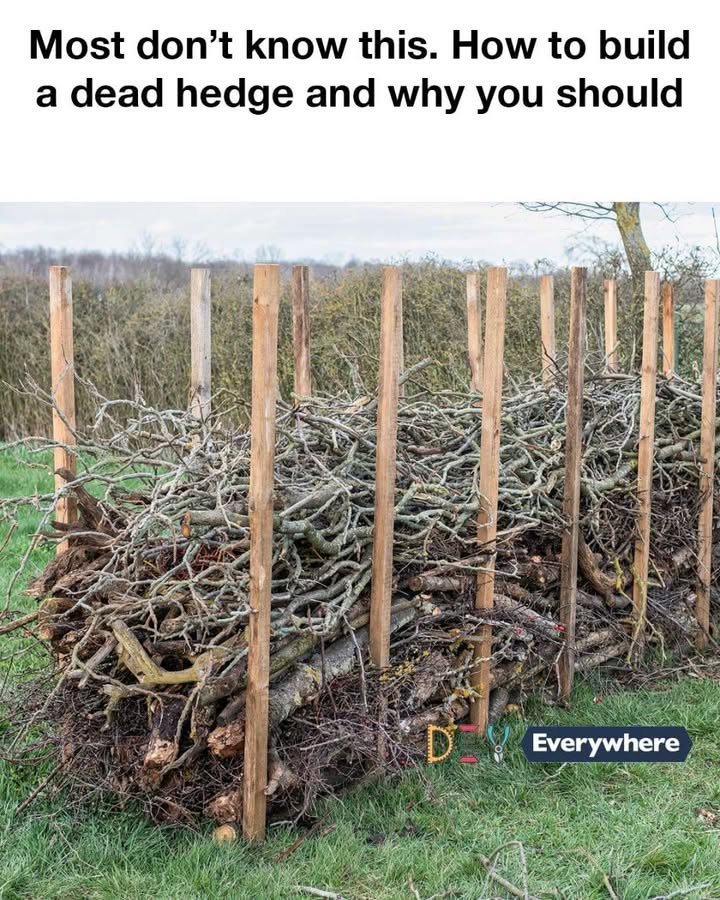
To build a dead hedge, you’ll need a variety of natural materials. The primary components are branches and twigs, ideally from hardwood trees like oak, beech, or ash, which decompose slowly. You’ll also need stakes or posts to support the structure; these can be made from sturdy branches or wooden poles. Additional materials can include leaves, smaller twigs, and other garden debris to fill gaps and add bulk. It’s important to use untreated wood to avoid introducing chemicals into your garden.
Step-by-Step Guide to Building a Dead Hedge
Building a dead hedge is a straightforward process that can be completed with minimal tools and materials. Follow these steps to create your own dead hedge.
Step 1: Selecting the Right Location
Choose a location that suits the purpose of your dead hedge. It should be an area where you need a barrier or want to enhance wildlife habitats. Consider factors such as sunlight, wind direction, and proximity to existing plants. Ensure the ground is relatively level to provide a stable base for your hedge.
Step 2: Gathering the Necessary Materials
Collect branches, twigs, and other organic materials from your garden or local area. Ensure you have a mix of thick and thin branches for structure and filling. Gather enough stakes or posts to support the length of your hedge, spacing them about 1-2 feet apart.
Step 3: Preparing the Ground
Clear the area of any debris or vegetation that might interfere with the stability of your hedge. If necessary, level the ground to ensure a stable base. Mark the outline of your hedge using stakes or string to guide your construction.
Step 4: Constructing the Base Layer
Begin by driving stakes or posts into the ground along the marked outline. These will form the backbone of your hedge. Use thicker branches to create the base layer, laying them horizontally between the stakes. Ensure they are tightly packed to provide a solid foundation.
Step 5: Adding Subsequent Layers
Continue adding layers of branches and twigs, alternating directions to increase stability. Use smaller twigs and leaves to fill gaps and add bulk. As you build up, ensure the hedge remains stable and compact. The height of the hedge will depend on its intended use, but typically ranges from 3 to 6 feet.
Step 6: Securing the Structure
Once the desired height is reached, secure the structure by weaving flexible branches around the stakes. This will help hold the materials in place and prevent them from shifting. Check for any loose areas and add additional materials as needed.
Step 7: Maintaining Your Dead Hedge
Dead hedges require minimal maintenance. Over time, the materials will decompose and settle, so periodically check for stability and add new materials as needed. This is also an opportunity to incorporate fresh garden waste, keeping the hedge robust and functional.
ADVERTISEMENT

