
Of course, for amazing tomato flavor, heirlooms have a reputation for incredible flavor. There’s a reason these tomatoes are so popular among long-time gardeners. These guys are often the reason tomatoes have a reputation for being divas in the garden. But they’re worth all the fuss for the flavorful tomatoes they produce.
1. Brandywine (Pink or Red)
Flavor profile: Rich, sweet, and full-bodied with a perfect acid balance.
Why it’s famous: This is the heirloom most folks start with, especially the Sudduth strain. It’s a big, beefy slicer that tastes like summer.
Caveat: Late to mature, lower yields, and fussy in wet weather—but worth it.
2. Cherokee Purple
Flavor profile: Deep, smoky, earthy with a sweet-savory balance.
Origin: Believed to be passed down by the Cherokee people.
Why we love it: A dusky, dark tomato with a loyal following. Slice it thick, sprinkle with salt, call it lunch.
3. Black Krim
Flavor profile: Intense umami, slightly salty, rich.
From: Crimea, Ukraine.
Why it rocks: Excellent in heat and coastal climates. Known for its unique, almost briny taste that gives it a cult status among tomato nerds.
4. Green Zebra
Green zebra tomatoes
Flavor profile: Tangy, zesty, almost citrusy.
Why it’s cool: It’s green when ripe and streaked with yellow—super eye-catching and full of zing. Holds up in salsa and fresh salads. Not your average sweet tomato, but exceptional in its own lane.
5. Paul Robeson
Flavor profile: Complex, smoky, with a hint of sweetness and acidity.
Named for: The singer and civil rights activist.
Why it stands out: It’s like Cherokee Purple’s moodier cousin. Gorgeous in color, with flavor that lingers in the best way.
6. Mortgage Lifter
Flavor profile: Classic tomato flavor—sweet, meaty, and mild.
Backstory: Developed in the 1930s by M.C. Byles (“Radiator Charlie”), who sold plants to pay off his mortgage.
Why it matters: Huge fruits, legendary taste, with a name that belongs in a country song.
7. Aunt Ruby’s German Green
Flavor profile: Sweet with a touch of spiced apple or tropical undertones.
Color: Bright green when ripe, with amber blushing.
Why it’s fun: A favorite among green tomato lovers, it wins flavor contests and turns heads at farmers’ markets.
8. ellogg’s BreaKkfast
Flavor profile: Bright, tropical, with a mild acidity and loads of sweetness.
Why you’ll love it: Big, orange beefsteaks that shine in flavor and presentation. If you want a low-acid tomato that still tastes like a tomato, this is your jam.
9. Black Cherry
Flavor profile: Bold, rich, and sweet with a little smokiness.
Why it slaps: All the depth of a black tomato, but in cherry form. Possibly the most flavorful cherry heirloom around.
10. Pineapple
Flavor profile: Sweet, fruity, low acid.
Appearance: Yellow and red marbled skin and flesh—absolutely stunning.
Why it’s extra: If you want a tomato that tastes like you should be eating it poolside with a Mai Tai, this is it.
11. Nebraska Wedding
Flavor profile: Mild, balanced, and juicy.
Why it’s loved: A reliable orange slicer with consistent yields. Not the most intense flavor, but beautiful and dependable.
12. Costoluto Genovese
Flavor profile: Tangy, old-world flavor—perfect for sauce.
From: Italy
Why it’s notable: Deeply ribbed and gorgeous, this one’s a star for slow-roasting or simmering down into tomato heaven.
13. Hillbilly (Potato Leaf)
Flavor profile: Low-acid, sweet, and fruity.
Color: Golden-yellow with red streaks
Why it’s a favorite: Striking and mellow, a good pick for people who shy away from high-acid tomatoes.
Now, let’s tackle the E in that equation, environment.
There are a few things you can do that will ensure you have the tastiest tomatoes possible each summer.
Since sugar is produced in plants through photosynthesis, and acids are formed as byproducts of this process, healthy foliage is a must. Be sure to feed your tomato plants consistently at the beginning of the season with a balanced fertilizer (as always, this is the one I recommend) or one higher in nitrogen, while the plant is actively growing and filling out.
Hand fertilizing tomatoes
But it’s not just up to nitrogen; this is where micronutrients like magnesium come in.
Magnesium is the central atom in chlorophyll and activates dozens of enzymes. Without it, sugar and acid production tanks.
Epsom salt (magnesium sulfate) is a time-tested way to boost magnesium levels. Still, unless you know your soil is deficient, Epsom salt can actually harm your crop or mess with calcium uptake. This is where I get to dole out my favorite and most oft-used gardening advice:
Get your soil tested.
If you’re serious about improving tomato flavor (and that of your other veggies), one of the best things you can do is to have your soil properly tested. You will know, without a doubt, what nutrients your soil is deficient in, if any. You’ll know the pH as well. That way, you aren’t guessing and you have a clear road map to better soil and better-tasting tomatoes.
Water Stress
Watering tomatoes
Next up, let’s stress your tomatoes. But only a little bit. Hear me out. Too much water leads to watery and bland fruit, or worse, blossom end rot and tomatoes splitting open on the vine. However, slightly drier conditions while the plant is ripening concentrate the sugars and aroma, giving you an amazing tomato.
We’re not talking drought conditions, you never want to let them wilt, but as the fruit starts reaching breaker stage, ease up on watering. To be fair, you should be doing this anyway. Tomatoes do best when watered deeply and infrequently. I’ve written about the ins and outs of watering tomatoes here. It’s worth a read no matter your tomato-growing goals.
Sun is Important Too
Pruned tomato leaves
Tomatoes need around eight hours of sun to build sugars; however, direct exposure to the sun on ripening fruit leads to sunscald, which does not make for flavorful tomatoes. Prune the top half of your plant sparingly, so that there are plenty of leaves for sugar and acid production and shade. Remove lower leaves as the plant grows to prevent diseases and focus all those nutrients, sugars and acids where the plant is making fruit. If you’re dealing with a scorcher of a summer, shade cloth can help significantly.
Breaker Stage
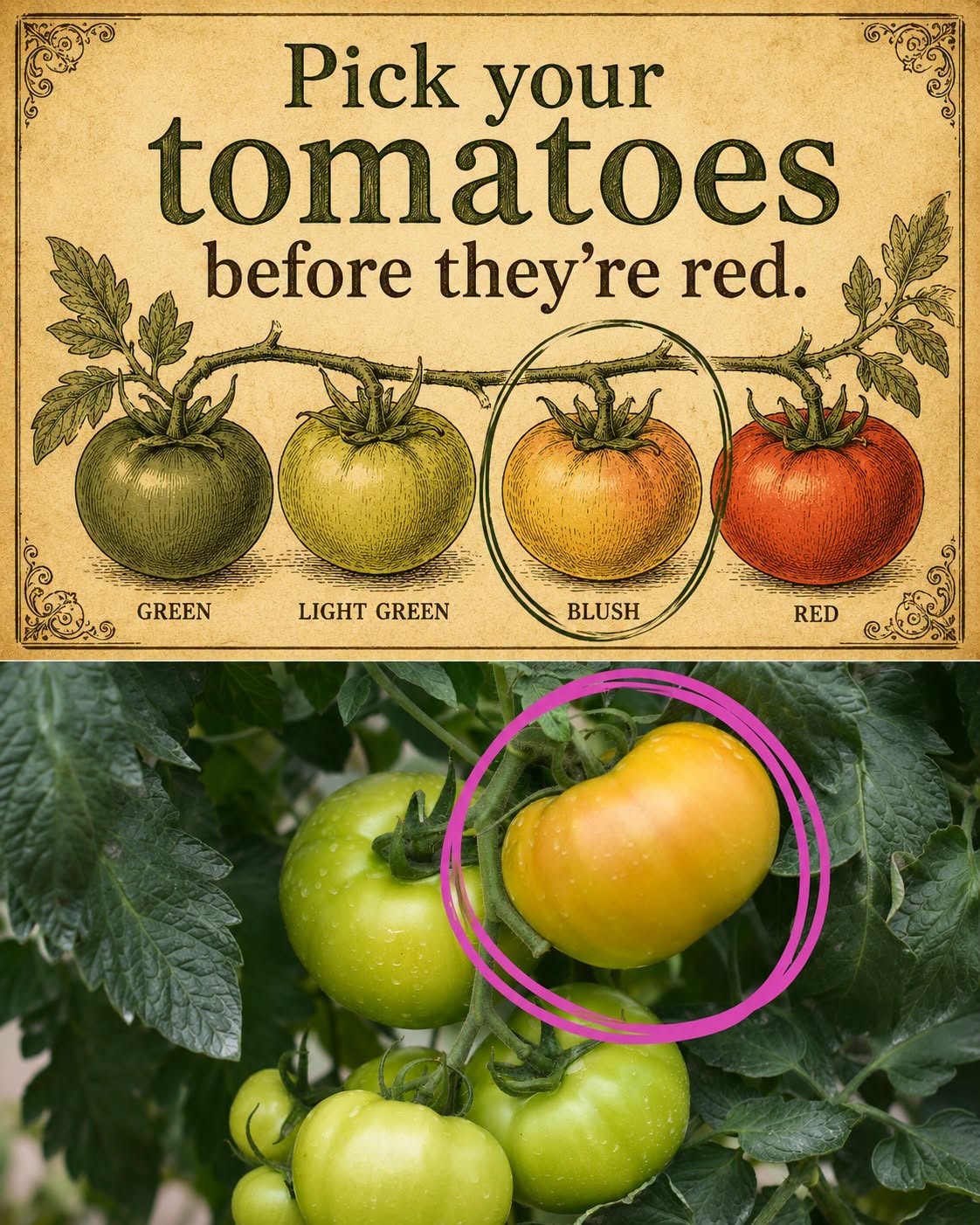
Tomato at breaker stage
When you pick your tomatoes and how you care for them after can be the difference between a meh tomato and garden ambrosia. Ripening actually begins in the center of the tomato and finishes once the tomato has been picked.
For the best flavor, you want to pick tomatoes in the “breaker” stage. This is before the tomato is perfectly red (or whatever color the variety you’ve chosen). The tomato should be blush colored, having lost most of its green.
You can read about this process in detail here.
Then, let the tomato finish ripening off the vine, ideally, in temperatures between 65-75°F and out of direct sunlight. It’s heat that causes tomatoes to ripen, not the sun. They do best in a breathable container, such as a paper bag or cardboard box. This allows ethylene to continue ripening the tomato, but blocks sunlight, which causes flavor enzymes to drop off.
Most importantly, never refrigerate tomatoes.
Now that you’ve put all that hard work into growing the perfect-tasting tomato, storing it in the fridge is the worst thing you could do. The low temps of the fridge actually deactivate certain enzymes that are responsible for that wonderful tomato flavor.
Tomato salad
Never endure another “meh” tomato again. The power to grow tomato perfection is in your hands. And the soil at your feet. Now that you’ve got flavor sorted out, let’s work on getting more tomatoes with this simple trick.
ADVERTISEMENT

