
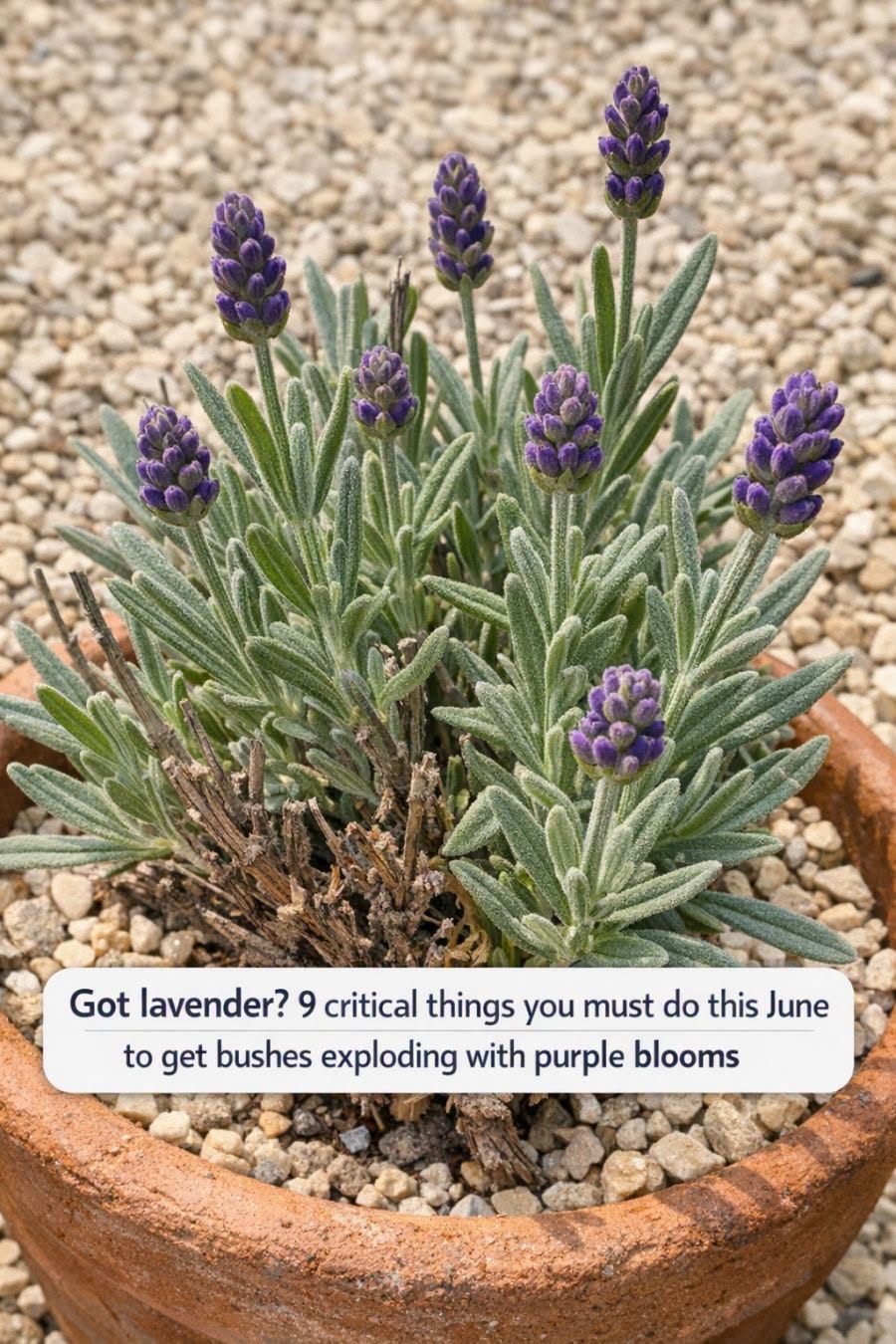
French lavender (Lavandula dentata) and Spanish lavender (Lavandula stoechas) are also excellent choices, particularly in warmer climates where they can enjoy the full sun. When choosing your lavender, consider your local climate and soil conditions to ensure you select a variety that will flourish.
2. Give Them a June Haircut: The Essential Post-Flowering Trim
Pruning your lavender in June is essential to promote healthy growth and a second wave of blooms. Once the initial flush of flowers has faded, it’s time to give your plants a trim. Remove about one-third of the plant’s height, focusing on cutting just above the new leaf growth. This encourages bushier plants and more blooms.
Be careful not to cut into the woody stems, as lavender does not regenerate well from old wood. Regular trimming keeps your lavender looking neat and prevents it from becoming leggy and sparse.
3. Master the Soak-and-Dry Watering Schedule Before Heat Spikes
Lavender thrives on a soak-and-dry watering schedule, especially as temperatures rise in June. Water your lavender deeply but infrequently, allowing the soil to dry out between waterings. This mimics the plant’s natural Mediterranean habitat and helps prevent root rot.
As a general rule, water your lavender once every two weeks, adjusting for rainfall and humidity. Ensure the soil has excellent drainage and consider adding sand or gravel to improve water flow if necessary.
4. Feed for Flowers, Not Foliage: The Right June Fertilizer Strategy
Lavender doesn’t require heavy feeding, but a light application of fertilizer in June can boost blooms. Opt for a low-nitrogen fertilizer, as too much nitrogen encourages leafy growth at the expense of flowers. A balanced fertilizer with a ratio such as 5-10-10 is ideal.
Apply the fertilizer sparingly, sprinkling it around the base of the plant and gently working it into the soil. Avoid fertilizing too late in the season, as this can lead to lush foliage and fewer flowers.
5. Get Sun and Airflow Perfect: Positioning Plants for Maximum Blooms
Lavender loves the sun and requires at least 6 to 8 hours of direct sunlight per day to thrive. Ensure your plants are positioned in a sunny spot with good air circulation to prevent fungal diseases. If your lavender is in pots, consider moving them to sunnier locations as the sun’s angle changes in June.
ADVERTISEMENT

